

Begijnhof Ten Wijngaerde, also known as the Princely Beguinage Ten Wijngaerde, is a historic, inhabited site in Bruges, founded in 1245. Its white houses and courtyard garden make it a quiet stop to pair with a walk to Minnewater, a lake and park in the city.
- Setting: A UNESCO World Heritage Site, recognised with 12 other Flemish beguinages in 1998.
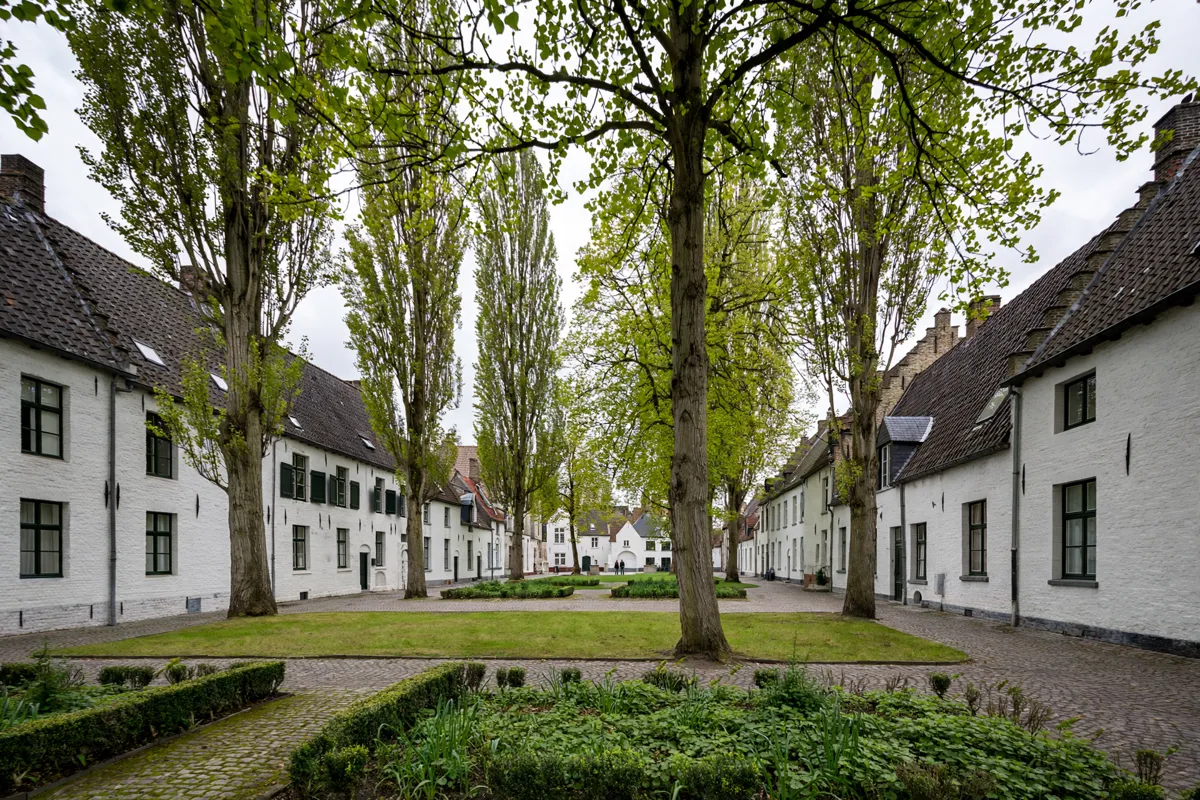
- Garden: White houses surround the courtyard, with poplar and lime trees.
- Admission: Free, according to Visit Bruges.
- Getting there: The nearest railway station is Station Brugge.
The Beguinage and its historic setting
Begijnhof Ten Wijngaerde is an inhabited historic community, not simply a courtyard preserved for visitors. Women have lived there continuously, and residents today include single women from Bruges and women with a religious vocation.
The courtyard garden is framed by white houses, with poplar and lime trees adding shade. In spring, daffodils and wild wood hyacinths bloom there. The Beguinage church contains Bruges’s oldest sedes sapientiae, a depiction of Mary and the Infant Jesus.
Visit Bruges describes the site as an authentic place of silence. Keep your voice low and respect the values of the people who live there; this is still their home.
Walking on to Minnewater
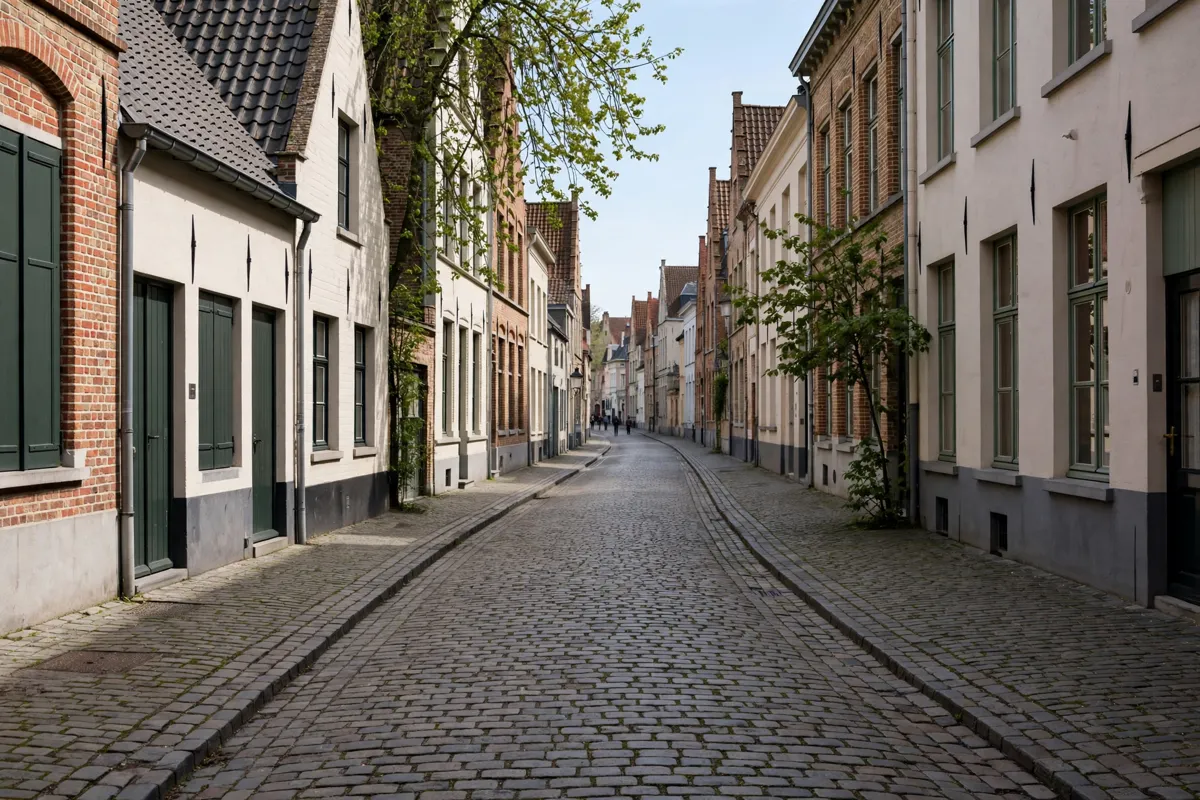
Minnewater, also called the Lake of Love, and the Beguinage are nearby points on a Bruges city walk. You can visit the courtyard first, then continue towards the lake and its park surroundings.
The connection works well as part of a broader route through the city. If you are planning a full day on foot, this morning-to-evening Bruges walking route offers a way to fit the city’s sights into one day.
The Beguinage and Minnewater are also part of the wider historic centre.
Paths, views and places to pause
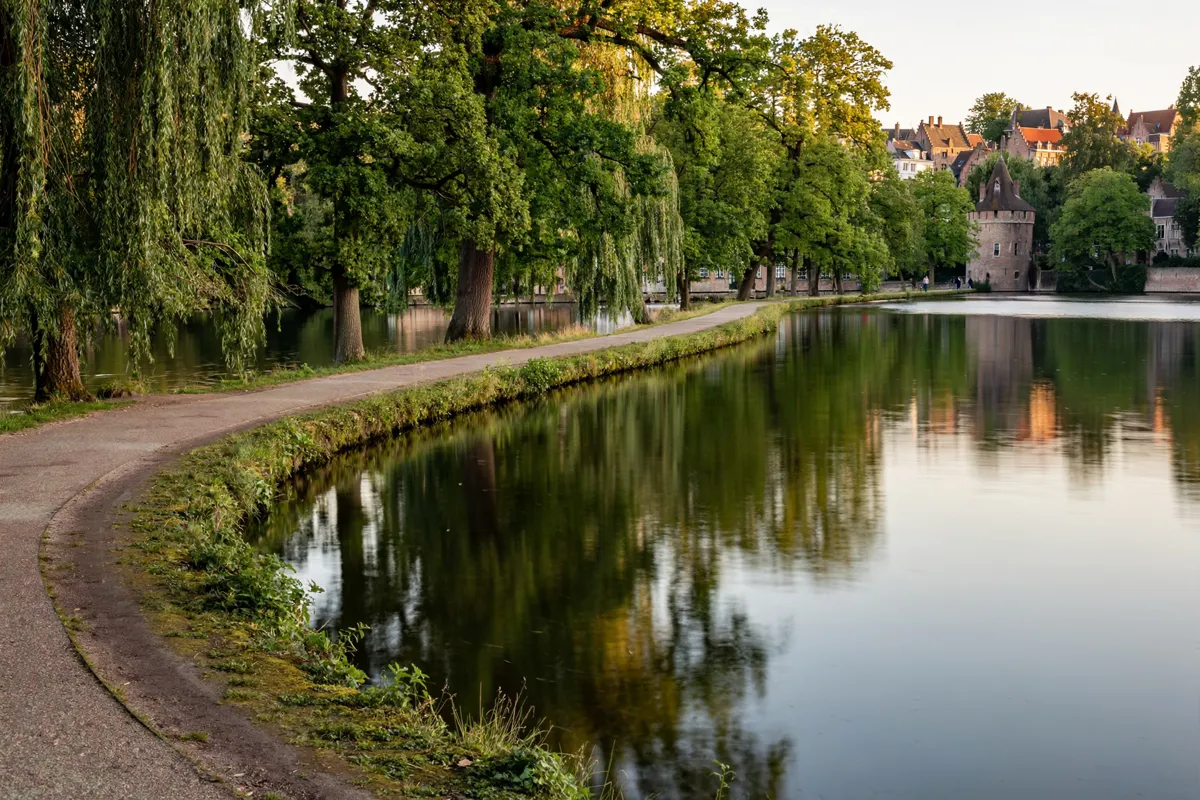
Minnewater’s lake and park paths offer an open, green contrast to the Beguinage’s enclosed courtyard. The area is part of the wider historic centre, whose squares and sights are covered in this guide to Bruges Old Town’s squares and sights. Take time to look across the water and follow the paths through the park before continuing into the city.
At the Beguinage, the courtyard itself is the natural place to pause: the whitewashed façades, trees and seasonal flowers create a calm setting. Keep the visit unhurried and quiet, and leave the residents’ daily routines undisturbed.
Visitor etiquette and access checks
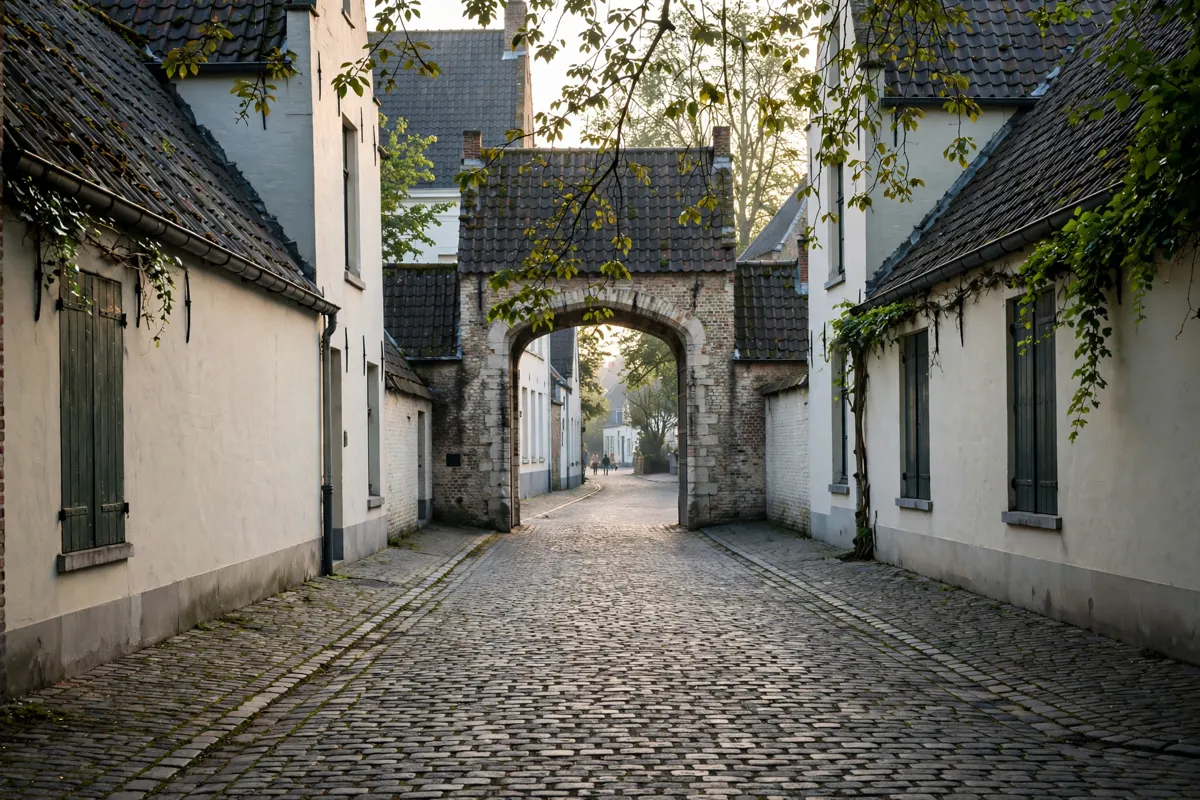
The Beguinage is free to enter, but its gates close at night, so check the current opening information before setting out. Visit Bruges describes the main gate as dating to the 18th century and notes a second entrance beside the Lock-Keeper’s House. Check the official site before you go.
The paths and entrance are accessible with assistance, while the adapted toilet is independently accessible. The main entrance at Wijngaardplein has a steep bridge; an alternative entrance beside the Lock-Keeper’s House avoids that bridge, but the route still crosses uneven cobbles before reaching the inner circle. The inner-circle route has flat cobblestones.
Pets and baby carriages are allowed. The nearest bus stop is 502818 Brugge Onze-Lieve-Vrouwekerk, and the nearest railway station is Station Brugge. Katelijne car park is the closest parking area. From Hotel Leopold, the Beguinage is about a seven-minute walk; the hotel is Hotel Leopold.
FAQs
Is Begijnhof Ten Wijngaerde free to visit?
Yes. Admission is free.
Do people still live in the Beguinage?
Yes. The Beguinage has been continuously inhabited exclusively by women, including single women from Bruges and women with a religious vocation.
Can you visit the Beguinage and Minnewater on one walk?
Yes. Both are nearby points on a city walk, so you can combine the Beguinage with time around Minnewater and its park paths.
Is the Beguinage accessible?
Some access is possible with assistance, but the approach includes a steep bridge at the main entrance or uneven cobbles on the alternative route. The inner-circle path is flat cobblestone.